
Introduction
Tourism is one of the fastest‑growing industries worldwide, and geography is its backbone. From mountains and beaches to historic cities and cultural landscapes, geography determines why certain destinations attract millions of visitors while others remain hidden gems.
What Is Geography of Tourism?
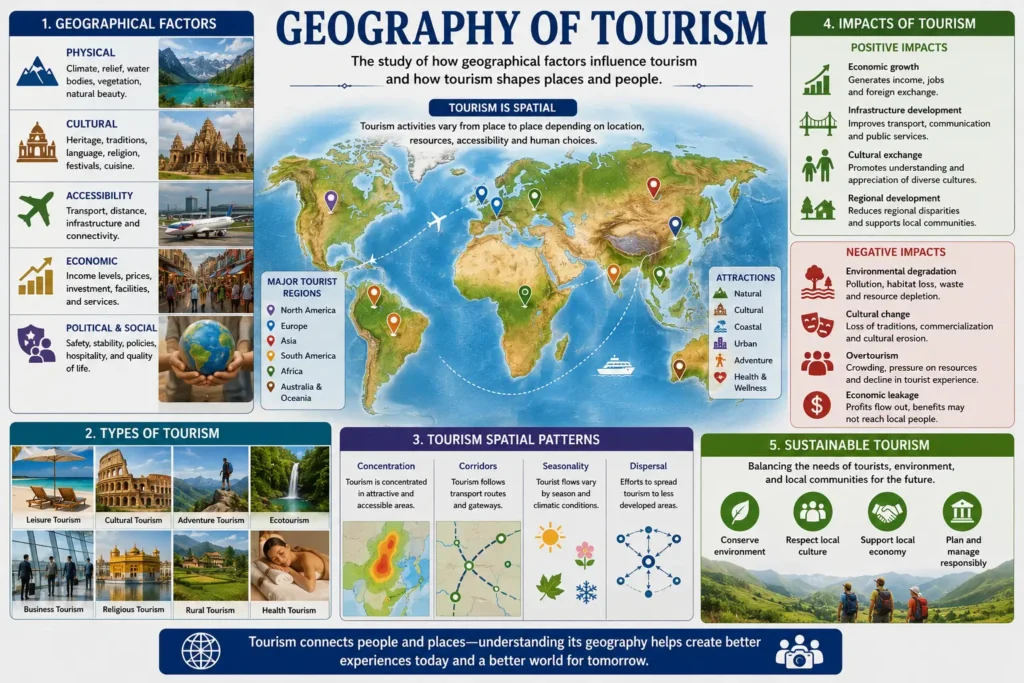
Geography of tourism studies how physical and human geography influence tourism activities. It covers:
- Natural landscapes (mountains, rivers, beaches, deserts).
- Cultural heritage (monuments, traditions, festivals).
- Accessibility (transport routes, airports, ports).
- Climate zones (seasonal tourism patterns).
Types of Tourism Geography
| Tourism Type | Geographical Basis | Examples |
|---|---|---|
| Nature Tourism | Landscapes, wildlife, ecosystems | Amazon rainforest, Himalayas |
| Cultural Tourism | Heritage sites, traditions | Taj Mahal, Rome, Kyoto |
| Adventure Tourism | Mountains, rivers, deserts | Mount Everest, Sahara Desert |
| Urban Tourism | Cities, infrastructure | Paris, New York, Dubai |
| Coastal Tourism | Beaches, islands | Maldives, Goa, Bali |
Role of Geography in Tourism Development
- Climate: Warm beaches attract tourists in winter; cool mountains attract in summer.
- Accessibility: Airports, highways, and ports make destinations reachable.
- Natural resources: Forests, rivers, and wildlife create eco‑tourism opportunities.
- Cultural geography: Traditions, food, and festivals enrich tourism experiences.
Global Tourism Hotspots
- Europe: Cultural heritage (Paris, Rome, London).
- Asia: Spiritual and natural tourism (India, Thailand, Japan).
- Africa: Wildlife safaris (Kenya, South Africa).
- Americas: Urban and adventure tourism (New York, Rio, Machu Picchu).
- Oceania: Coastal and eco‑tourism (Australia, New Zealand).
Sustainable Geography of Tourism
Tourism must balance development with sustainability.
- Eco‑tourism protects biodiversity.
- Community tourism empowers locals.
- Cultural preservation safeguards heritage.
- Climate‑friendly tourism reduces carbon footprints.
Challenges in Tourism Geography
- Over‑tourism damaging fragile ecosystems.
- Climate change altering tourist seasons.
- Pollution affecting beaches and rivers.
- Unequal development leaving rural areas behind.
The geography of tourism explains why destinations thrive and how they must adapt to changing climates, cultures, and economies. By understanding geography, we can promote sustainable, inclusive, and culturally rich tourism worldwide.
Conclusion
The geography of tourism explains why destinations thrive and how they must adapt to changing climates, cultures, and economies. By understanding geography, we can promote sustainable, inclusive, and culturally rich tourism worldwide.

