
Introduction
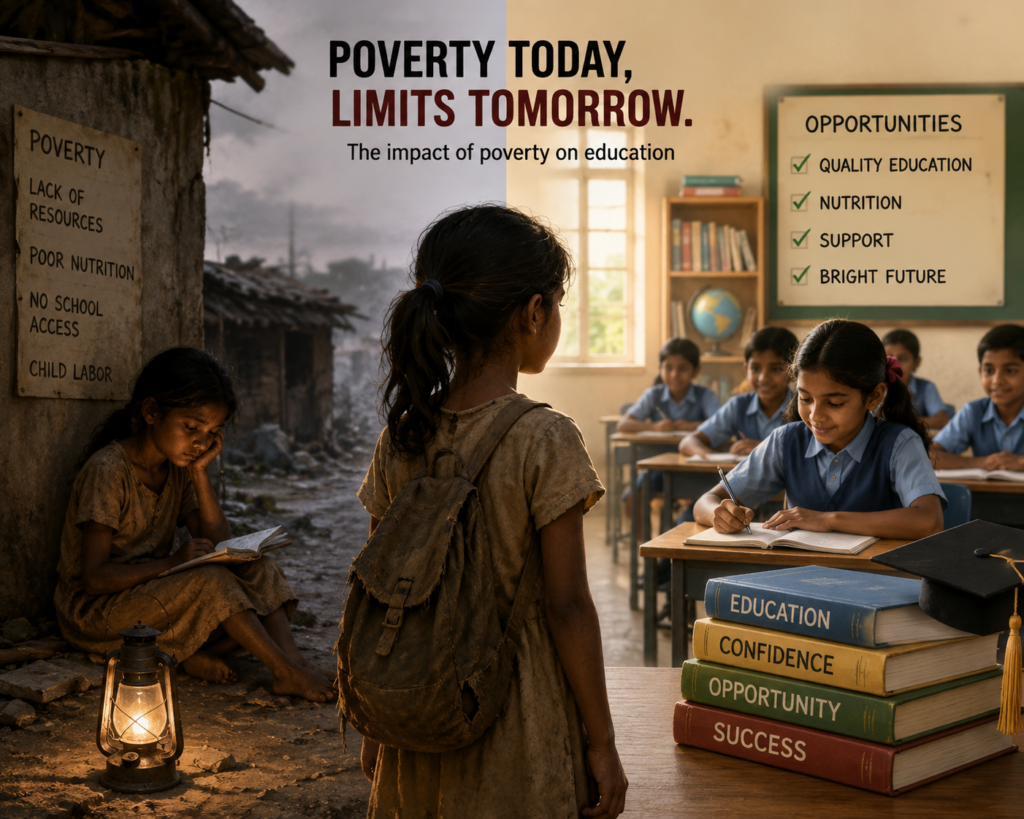
Education is often described as the key to breaking the cycle of poverty. Yet, poverty itself remains one of the biggest barriers to accessing quality education. Around the world, millions of children face challenges such as lack of resources, poor infrastructure, malnutrition, and limited opportunities—all of which directly affect their ability to learn. This article explores the deep connection between poverty and education, highlighting causes, consequences, and solutions.
Understanding Poverty and Its Link to Education
- Definition of poverty: Poverty is not just about lack of money—it includes deprivation of basic needs like food, shelter, healthcare, and education.
- Global statistics: According to UNESCO, over 258 million children and youth are out of school worldwide, with poverty being the primary factor.
- Cycle of poverty: Families trapped in poverty often cannot afford education, leading to limited job opportunities and perpetuating the cycle.
How Poverty Affects Education
- Access to schools: Children in poor communities often live far from schools or lack transportation.
- Quality of education: Underfunded schools struggle with inadequate teachers, outdated materials, and poor infrastructure.
- Nutrition and health: Malnutrition affects concentration, memory, and overall learning ability.
- Dropout rates: Poverty forces children to leave school early to work and support their families.
- Gender inequality: Girls in impoverished regions are more likely to be denied education due to cultural and financial barriers.
Long-Term Consequences
- Economic impact: Lack of education reduces employability, leading to low wages and continued poverty.
- Social inequality: Education gaps widen inequality between rich and poor communities.
- Generational poverty: Children of uneducated parents are less likely to pursue higher education.
Solutions to Break the Cycle
- Government policies: Free schooling, scholarships, and midday meal programs help reduce barriers.
- Community initiatives: NGOs and local organizations provide resources, mentorship, and safe learning spaces.
- Technology in education: Digital learning platforms can reach remote areas and provide affordable education.
- Teacher training: Skilled teachers can adapt to challenges and provide quality education despite limited resources.
- Parental involvement: Encouraging parents to value education helps sustain children’s learning journey.

