
Introduction
Online learning has revolutionized education. From professional certifications to hobby-based courses, the internet offers endless opportunities. But with thousands of options available, how do you choose the right online course that truly benefits your career or personal growth?
This guide will help you understand the key factors to consider, the mistakes to avoid, and the steps to make the best decision for your future.
Why Choosing the Right Online Course Matters
- Time investment: Courses can take weeks or months—choosing wisely saves time.
- Financial cost: Many courses require fees; picking the wrong one wastes money.
- Career impact: The right course can boost your resume, skills, and confidence.
- Personal growth: Learning should be enjoyable and aligned with your goals.
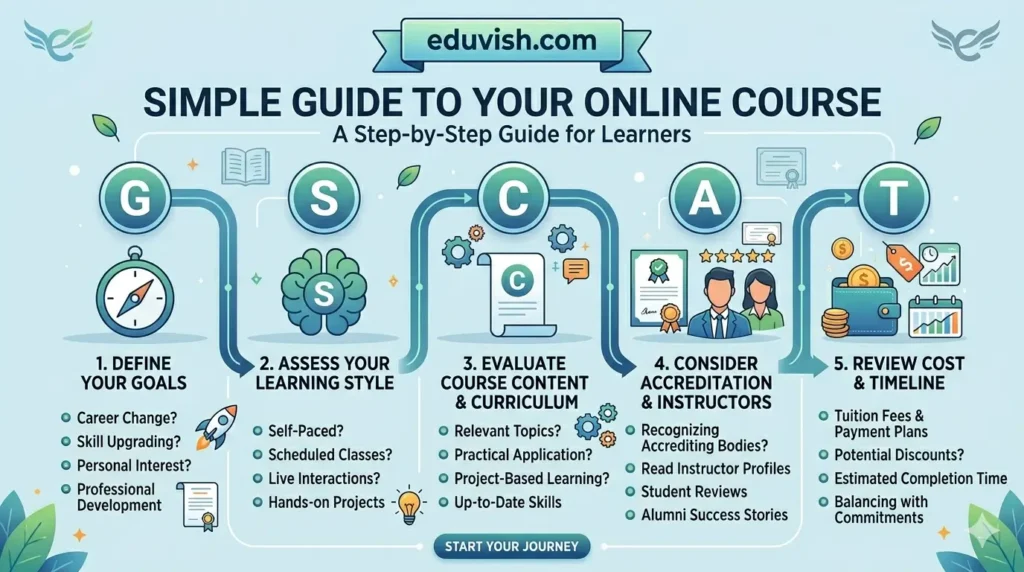
Steps to Choose the Right Online Course
1. Define Your Goals
Ask yourself: Why do I want to take this course?
- Career advancement
- Skill development
- Personal interest
- Certification requirement
Clear goals help narrow down choices.
2. Check Course Accreditation
- Accredited courses carry more weight in the job market.
- Look for partnerships with universities or recognized institutions.
3. Evaluate Course Content
- Does the syllabus cover what you need?
- Is the content updated for current industry trends?
- Are there practical assignments or just theory?
4. Research the Instructor
- Check their background, expertise, and teaching style.
- Look for reviews or LinkedIn profiles.
5. Read Student Reviews
- Reviews reveal real experiences.
- Look for feedback on course quality, support, and outcomes.
6. Consider Flexibility
- Self-paced vs. live sessions.
- Does it fit your schedule?
7. Check Certification Value
- Will the certificate be recognized by employers?
- Is it shareable on LinkedIn?
8. Compare Costs
- Free vs. paid courses.
- Scholarships or discounts available.
9. Test Free Trials
- Many platforms offer trial lessons.
- Use them to check teaching style and content quality.
10. Assess Support & Community
- Discussion forums, mentorship, or peer groups.
- Strong communities enhance learning.

