
Introduction
In today’s competitive academic environment, students need more than just hard work—they need clarity, focus, and direction. That’s where SMART goals come in. SMART stands for Specific, Measurable, Achievable, Relevant, and Time-bound. By setting SMART goals, students can improve their study habits, boost grades, and prepare for future success. Eduvish.com is dedicated to helping learners unlock their full potential with practical strategies.
What Are SMART Goals?
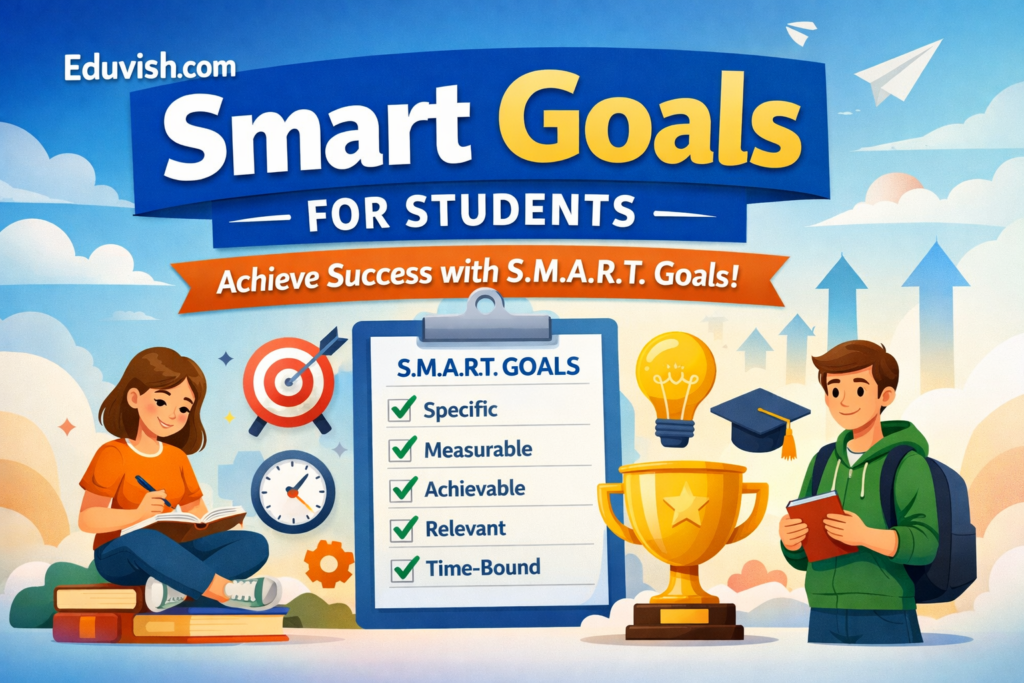
SMART goals are structured objectives that help students stay organized and motivated. Instead of vague goals like “I want to do better in school,” SMART goals provide a clear roadmap.
- Specific – Define exactly what you want to achieve.
- Measurable – Track progress with clear criteria.
- Achievable – Set realistic goals within your abilities.
- Relevant – Align goals with your academic or career path.
- Time-bound – Set deadlines to stay accountable.
Importance of SMART Goals for Students
- Improved focus – Students know exactly what to work on.
- Better time management – Deadlines prevent procrastination.
- Higher motivation – Achievable goals keep students inspired.
- Academic success – Structured goals lead to better grades.
- Future readiness – Prepares students for careers and life challenges.
Examples of SMART Goals for Students
- Improve grades – “I will raise my math grade from B to A by practicing 30 minutes daily.”
- Develop study habits – “I will study for 2 hours every evening for the next 3 weeks.”
- Enhance communication skills – “I will join a debate club and participate in 3 competitions this semester.”
- Boost physical health – “I will exercise for 30 minutes, 5 days a week.”
- Prepare for career – “I will complete 2 online courses in digital marketing before the semester ends.”
How to Set SMART Goals
- Step 1: Write down your goal clearly.
- Step 2: Break it into measurable steps.
- Step 3: Ensure it’s realistic and achievable.
- Step 4: Connect it to your long-term vision.
- Step 5: Set a deadline and track progress.