
How to Improve Your Skills
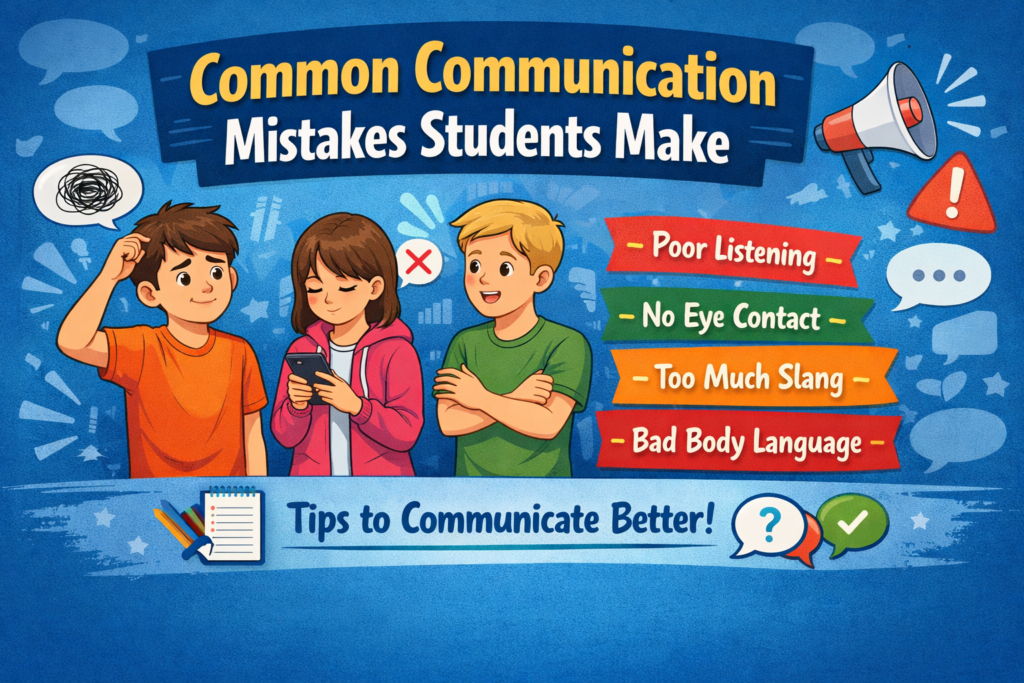
Effective communication is one of the most important skills for students. Whether it’s writing an email to a professor, giving a class presentation, or working on a group project, the way you communicate directly impacts your academic success and future career. Unfortunately, many students unknowingly make mistakes that weaken their message and create misunderstandings. Let’s explore the most common communication mistakes and how to avoid them.
1. Not Listening Properly
- Students often focus on what they want to say instead of truly listening.
- Mistakes: Interrupting, checking phones, or thinking about responses instead of listening.
- Fix: Practice active listening, maintain eye contact, and ask clarifying questions.
2. Overusing Slang and Text Language
- Using slang like “LOL,” “IDK,” or abbreviations such as “u” instead of “you” in formal settings looks unprofessional.
- Fix: Use clear, proper language in emails, presentations, and interviews. Save slang for casual conversations.
3. Poor Body Language
- Crossing arms, avoiding eye contact, or slouching sends negative signals.
- Fix: Maintain open posture, smile, and use gestures to emphasize points.
4. Speaking Too Fast or Too Softly
- Talking too quickly confuses listeners, while speaking too softly makes it hard to hear.
- Fix: Slow down, articulate clearly, and project your voice confidently.
5. Overusing Filler Words
- Words like “um,” “like,” and “you know” reduce credibility.
- Fix: Pause silently instead of filling gaps. Practice speaking with confidence.
6. Not Considering the Audience
- Using the same tone with professors, classmates, and employers is a mistake.
- Fix: Adjust tone and language depending on the audience. Formal for professors, casual for peers.
7. Being Passive or Aggressive in Groups
- Some students avoid speaking up, while others dominate discussions.
- Fix: Aim for assertive communication—share ideas confidently while respecting others.
8. Avoiding Questions
- Fear of looking foolish stops students from asking questions.
- Fix: Asking questions shows engagement and helps avoid misunderstandings.
9. Misinterpreting Tone and Emotion
- Misreading sarcasm or assuming anger can cause conflicts.
- Fix: Pay attention to tone and body language, and clarify when unsure.
10. Lack of Preparation
- Entering presentations or discussions without preparation leads to mistakes.
- Fix: Research, organize thoughts, and rehearse before speaking.
Conclusion
By avoiding these common communication mistakes, students can build confidence, improve relationships, and succeed academically and professionally. Communication is not just about speaking—it’s about listening, body language, tone, and preparation.

