
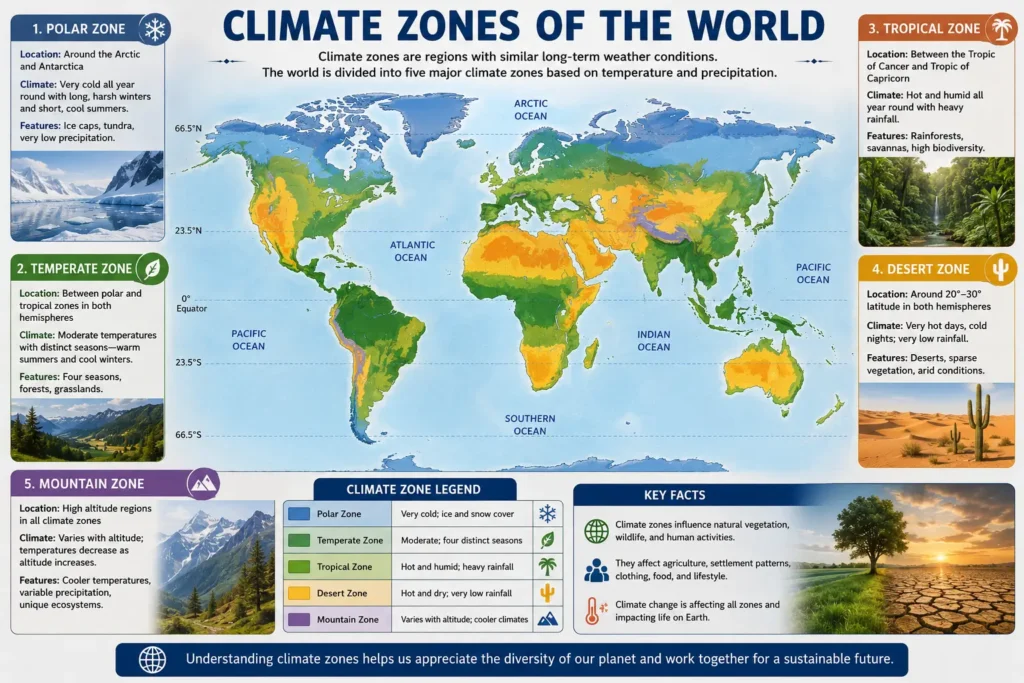
Introduction
The Earth is a diverse planet with varying climates that shape ecosystems, cultures, and economies. Climate zones are regions classified based on temperature, rainfall, and seasonal patterns. Understanding the climate zones of the world is essential for agriculture, settlement, biodiversity, and global trade.
This article explores the major climate zones, their characteristics, and their importance in shaping human and natural life.
What Are Climate Zones?
Climate zones are divisions of the Earth’s surface based on long‑term weather patterns. They help scientists, geographers, and policymakers understand environmental conditions and plan accordingly.
Key Factors Determining Climate Zones
- Latitude: Distance from the equator affects temperature.
- Altitude: Higher elevations are cooler.
- Ocean currents: Influence coastal climates.
- Wind patterns: Distribute heat and moisture.
- Topography: Mountains and valleys affect rainfall.
Major Climate Zones of the World
Scientists often use the Köppen Climate Classification System to categorize global climates.
1. Tropical Climate Zone
- Found near the equator.
- Hot and humid year‑round.
- Heavy rainfall supports rainforests.
- Examples: Amazon Basin, Congo Basin, Southeast Asia.
2. Dry Climate Zone
- Includes deserts and semi‑arid regions.
- Very little rainfall, extreme temperatures.
- Examples: Sahara Desert, Arabian Peninsula, Australian Outback.
3. Temperate Climate Zone
- Moderate temperatures with four distinct seasons.
- Supports agriculture and dense human populations.
- Examples: Europe, Eastern USA, parts of China.
4. Continental Climate Zone
- Found in inland areas away from oceans.
- Cold winters, hot summers.
- Examples: Russia, Canada, Central Asia.
5. Polar Climate Zone
- Extremely cold year‑round.
- Ice caps and tundra dominate.
- Examples: Antarctica, Greenland, Arctic regions.
Importance of Climate Zones
Climate zones influence every aspect of life.
Key Roles
- Agriculture: Determines crop suitability.
- Biodiversity: Shapes ecosystems and species distribution.
- Human settlement: Guides where people live and thrive.
- Trade and economy: Impacts industries like tourism, farming, and energy.
- Culture: Influences traditions, clothing, and food.
Climate Zones and Human Civilization
Civilizations have historically developed in favorable climate zones.
- Tropical zones supported early agriculture.
- Temperate zones fostered industrial revolutions.
- Dry zones encouraged trade routes like the Silk Road.
- Polar zones remain sparsely populated but vital for scientific research.
Climate Change and Shifting Zones
Global warming is altering climate zones.
- Melting ice caps expand temperate regions.
- Desertification threatens dry zones.
- Changing rainfall patterns affect agriculture.
This shift impacts biodiversity, food security, and global migration.
Conclusion
The climate zones of the world are more than scientific categories — they are the foundation of life on Earth. From tropical rainforests to polar ice caps, each zone plays a role in shaping ecosystems, cultures, and economies.
Understanding these zones helps us adapt to climate change and build a sustainable future.
Banner Image
A banner would depict the Earth divided into zones: tropical rainforests, deserts, temperate forests, continental plains, and polar ice caps — showing the diversity of climates across the globe.

