
Introduction
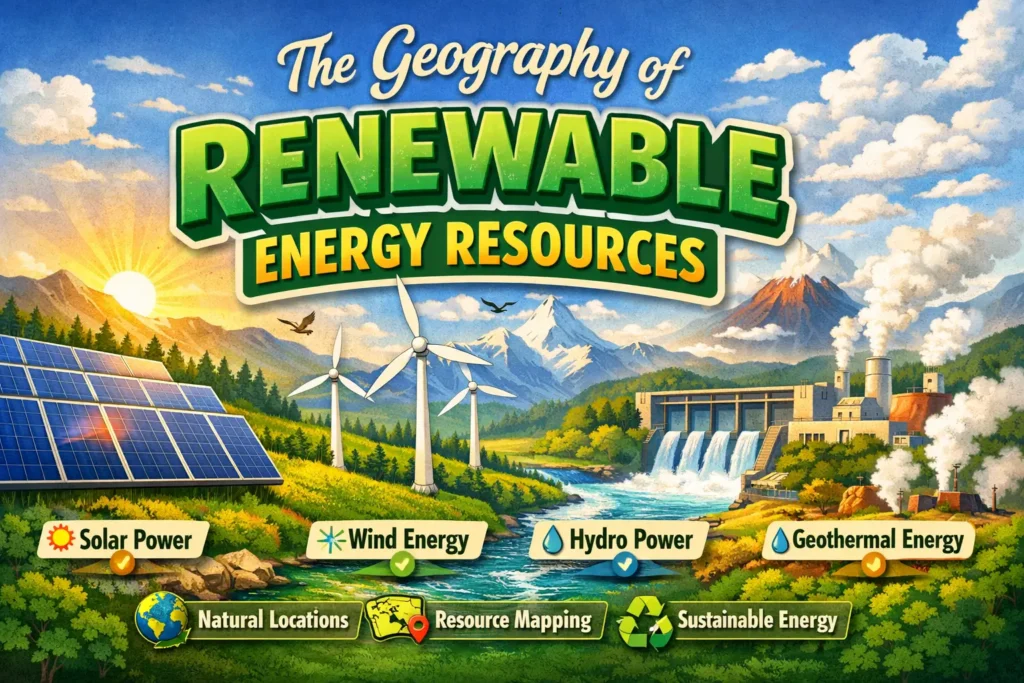
The world is moving toward a cleaner, greener future — and renewable energy resources are at the heart of this transformation. Geography plays a crucial role in determining where renewable energy sources like solar, wind, hydro, geothermal, and biomass are found and how they are utilized.
Understanding the geography of renewable energy resources helps us identify the best locations for energy production, manage resources sustainably, and reduce dependence on fossil fuels.
What Are Renewable Energy Resources?
Renewable energy resources are natural sources of energy that can be replenished over time. Unlike non‑renewable sources such as coal or oil, they are sustainable and environmentally friendly.
Key Types of Renewable Energy
| Type | Source | Example |
|---|---|---|
| Solar Energy | Sunlight | Solar panels, solar farms |
| Wind Energy | Air movement | Wind turbines |
| Hydropower | Flowing water | Dams, tidal energy |
| Geothermal Energy | Earth’s internal heat | Geothermal plants |
| Biomass Energy | Organic matter | Biofuels, biogas |
The Role of Geography in Renewable Energy
Geography determines the availability, efficiency, and sustainability of renewable resources.
Key Geographical Factors
- Climate: Sunlight, wind patterns, and rainfall affect energy potential.
- Topography: Mountains, plains, and rivers influence resource distribution.
- Latitude and altitude: Affect solar intensity and wind speed.
- Water bodies: Essential for hydroelectric projects.
- Geological activity: Determines geothermal potential.
Solar Energy Geography
Solar energy depends on sunlight intensity and duration, which vary by region.
Global Solar Hotspots
| Region | Characteristics | Examples |
|---|---|---|
| Tropical zones | High solar radiation year‑round | India, Brazil, Indonesia |
| Desert regions | Clear skies, minimal rainfall | Sahara, Arabian Peninsula |
| High‑altitude areas | Strong sunlight, low humidity | Andes, Himalayas |
India’s Solar Geography
India’s Thar Desert and southern states like Tamil Nadu and Andhra Pradesh are ideal for solar farms due to high sunlight exposure.
Wind Energy Geography
Wind energy relies on air pressure differences caused by temperature variations.
Ideal Locations
- Coastal areas with consistent sea breezes.
- Mountain passes where wind accelerates.
- Open plains with minimal obstacles.
Global Wind Corridors
| Region | Wind Speed | Examples |
|---|---|---|
| North Sea | High | UK, Denmark |
| Great Plains | Moderate to high | USA |
| Gujarat Coast | High | India |
Hydropower Geography
Hydropower depends on river flow, elevation, and rainfall.
Key Factors
- River gradient: Steeper slopes generate more energy.
- Rainfall patterns: Ensure consistent water supply.
- Catchment area: Determines water volume.
Major Hydropower Regions
| Region | Example Projects |
|---|---|
| Himalayas | Tehri Dam (India), Three Gorges (China) |
| Andes | Itaipu Dam (Brazil‑Paraguay) |
| Rocky Mountains | Hoover Dam (USA) |
Geothermal Energy Geography
Geothermal energy is found in tectonically active regions where magma heats underground water.
Global Geothermal Zones
| Region | Characteristics | Examples |
|---|---|---|
| Pacific Ring of Fire | High volcanic activity | Japan, Philippines |
| East African Rift | Crustal movement | Kenya, Ethiopia |
| Iceland | Volcanic island | Geothermal power plants |
Biomass Energy Geography
Biomass energy depends on agricultural and forest resources.
Key Sources
- Crop residues (rice husk, sugarcane bagasse).
- Forest waste (wood chips, leaves).
- Animal waste (biogas).
Ideal Regions
| Region | Resources |
|---|---|
| South Asia | Agricultural residues |
| Europe | Forest biomass |
| Africa | Organic waste |
Mapping Renewable Energy Resources
Geographers use GIS (Geographic Information Systems) and remote sensing to map renewable energy potential.
Applications
- Identifying suitable sites for solar and wind farms.
- Monitoring water flow for hydropower.
- Assessing geothermal zones.
- Planning sustainable resource management.
Global Distribution of Renewable Energy
| Resource | Leading Regions |
|---|---|
| Solar | India, USA, China |
| Wind | Denmark, Germany, UK |
| Hydro | Brazil, China, Canada |
| Geothermal | Iceland, Kenya, Japan |
| Biomass | India, Indonesia, Brazil |
Importance of Geography in Renewable Planning
Geography helps governments and industries make informed decisions about energy projects.
Benefits
- Efficient resource use
- Reduced environmental impact
- Economic development
- Energy security
Challenges in Renewable Energy Geography
Despite progress, several challenges persist.
Key Issues
- Uneven resource distribution.
- High initial investment.
- Land use conflicts.
- Environmental concerns (e.g., dam displacement).
Future of Renewable Energy Geography
The future lies in integrated energy mapping, smart grids, and cross‑border cooperation.
Emerging trends include:
- Floating solar farms on reservoirs.
- Offshore wind farms in coastal regions.
- Hybrid renewable systems combining multiple sources.
Conclusion
The geography of renewable energy resources shapes how nations harness clean energy. From sun‑drenched deserts to windy coasts and volcanic zones, Earth’s landscapes offer endless opportunities for sustainable power.
By understanding geographic patterns, we can plan smarter, reduce emissions, and build a greener future for generations to come.

