
Introduction
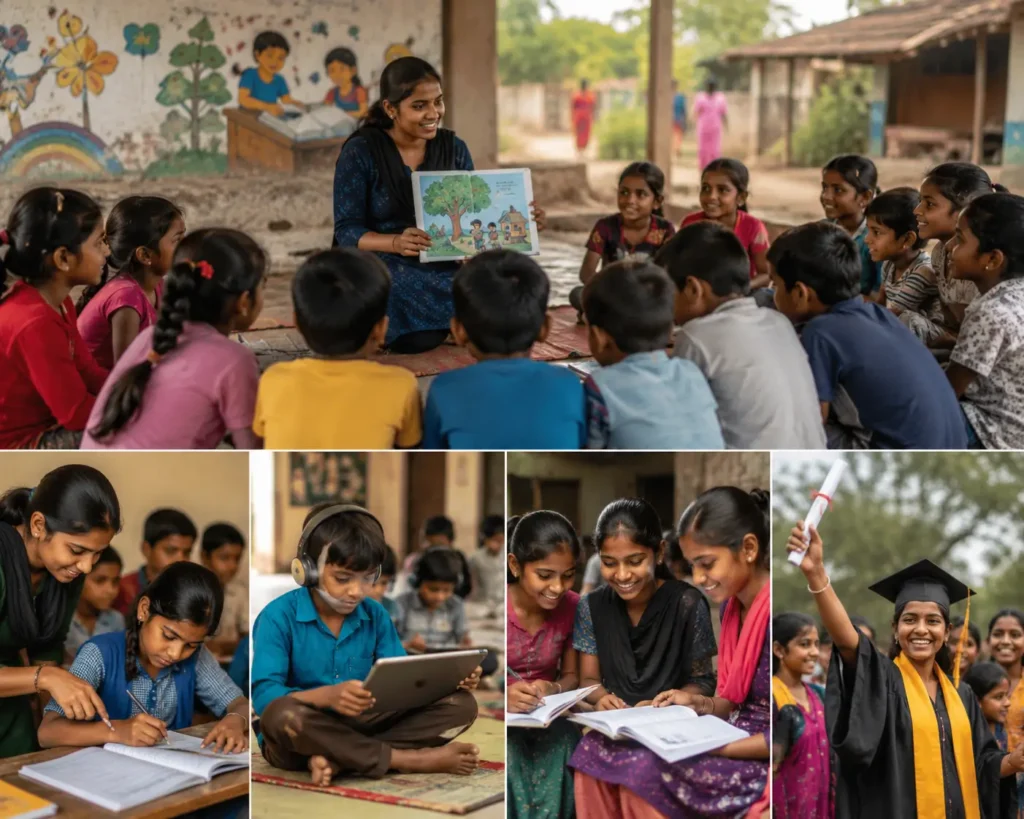
NGOs in Indian education play a crucial role in improving access to quality learning, supporting underprivileged students, and strengthening educational outcomes across the country. Through literacy programs, teacher training initiatives, digital learning projects, and rural education support, NGOs help bridge educational gaps and promote inclusive learning opportunities.
Key roles of NGOs:
- Expanding access to education in rural and tribal areas.
- Tackling issues like teacher absenteeism and poor infrastructure.
- Promoting gender equality and inclusive education.
- Innovating with digital literacy, life skills, and community engagement.
Major Contributions of NGOs
- Pratham: Known for its “Read India” campaign, improving literacy outcomes.
- Smile Foundation: Focuses on holistic child development, including health and education.
- Teach For India: Mobilizes young professionals to teach in under-resourced schools.
- Akshaya Patra: Provides mid-day meals to millions, improving attendance and nutrition.
- Educate Girls: Works to enroll and retain girls in schools, especially in Rajasthan.
- Room to Read: Promotes literacy and gender equality in education
Leading NGOs in Indian Education
Room to Read – Promotes literacy and gender equality.
Pratham – Famous for the “Read India” campaign.
Smile Foundation – Works on education, healthcare, and livelihood.
Teach For India – Mobilizes youth to teach in under-resourced schools.
Akshaya Patra – Provides mid-day meals to improve attendance.
Educate Girls – Focuses on girls’ enrollment in Rajasthan.
Case Studies
- Digantar (Jaipur): Redefines schooling with child-centered learning.
- Shiksha Karmi Project (Rajasthan): Tackles teacher absenteeism in rural schools.
- Lok Jumbish Movement: A grassroots initiative for universal education.
Challenges Faced by NGOs
- Funding limitations – Reliance on donations and CSR.
- Policy integration – Aligning with government schemes.
- Scaling issues – Expanding pilot projects nationwide.
- Social barriers – Tackling child labor and gender bias.
Conclusion
NGOs are strategic partners in India’s educational journey. Their grassroots innovation, combined with government collaboration, ensures that every child has the right to learn and thrive.