
INTRODUCATION
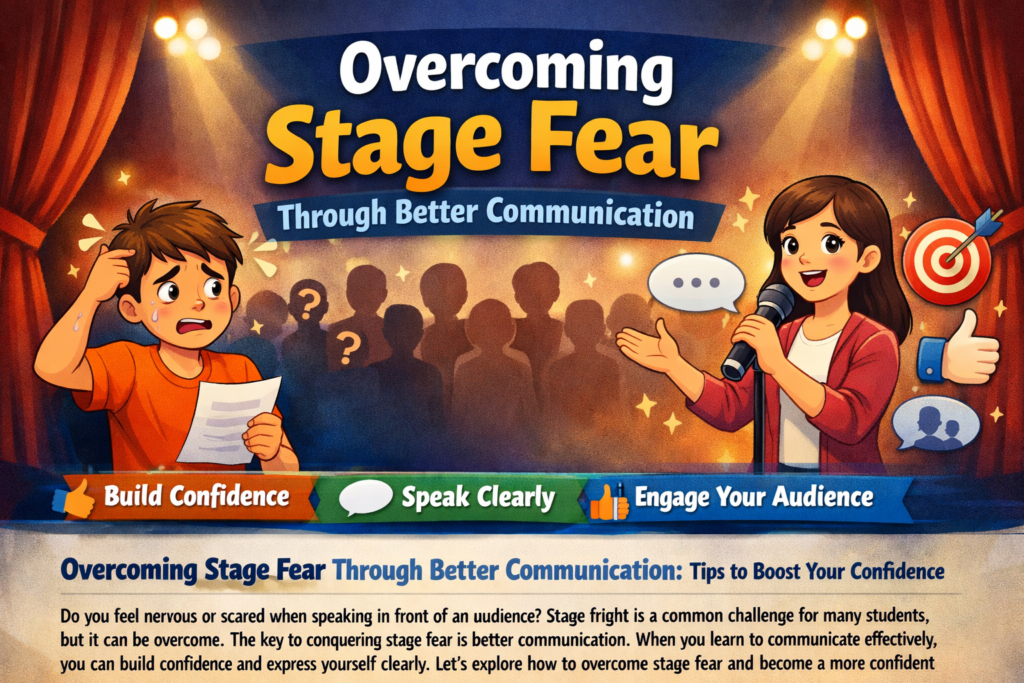
Stage fear—also known as glossophobia—is one of the most common challenges faced by students, professionals, and even experienced speakers. The trembling hands, racing heartbeat, and dry mouth before stepping onto a stage are feelings many can relate to. But here’s the good news: stage fear isn’t permanent. With better communication skills, you can transform anxiety into confidence and deliver your message effectively.
Understanding Stage Fear
Stage fear is a psychological response triggered by the fear of judgment or failure. It’s not just about being shy—it’s about the pressure of performing in front of others.
Common Symptoms:
- Sweaty palms and shaky voice
- Forgetting lines or losing focus
- Rapid heartbeat and nervous body movements
Why It Happens:
- Lack of preparation
- Fear of making mistakes
- Negative self-talk
- Limited communication confidence
Solution: Recognize that fear is natural. Even great speakers like Steve Jobs and Oprah Winfrey once struggled with stage fright. The key is learning how to communicate effectively to manage those emotions.
The Role of Communication in Overcoming Stage Fear
Communication is not just about speaking—it’s about connecting. When you focus on expressing your ideas clearly, your fear begins to fade. Effective communication helps you:
- Build confidence
- Engage your audience
- Reduce nervousness through clarity
- Create a positive impression
Step-by-Step Guide to Overcoming Stage Fear Through Communication
1. Prepare Thoroughly
Preparation is the foundation of confidence. The more you know your topic, the less you’ll fear forgetting it.
Tips:
- Research your topic deeply.
- Write down key points instead of memorizing everything.
- Practice in front of a mirror or record yourself.
SEO Keywords: public speaking tips for students, how to overcome stage fear, presentation confidence
2. Practice Positive Self-Talk
Your inner dialogue shapes your performance. Replace negative thoughts like “I’ll mess up” with “I’m ready and capable.”
Affirmations to Try:
- “I am confident and prepared.”
- “My audience wants me to succeed.”
- “I can communicate clearly.”
SEO Keywords: build confidence in public speaking, positive communication mindset
3. Use Breathing Techniques
Deep breathing helps calm your nerves and steady your voice.
Technique:
- Inhale slowly through your nose for 4 seconds.
- Hold for 2 seconds.
- Exhale through your mouth for 6 seconds.
Repeat this before and during your presentation to stay composed.
4. Start with a Strong Opening
A powerful start captures attention and boosts your confidence.
Examples:
- Begin with a question: “Have you ever felt nervous before speaking in public?”
- Share a short story or quote.
- Use humor to break the ice.
SEO Keywords: effective presentation openings, engaging audience communication
5. Focus on the Message, Not the Fear
Shift your attention from yourself to your message. When you concentrate on delivering value, fear loses its grip.
Tip: Think of yourself as a messenger, not a performer.
6. Engage with Your Audience
Interaction reduces anxiety and builds connection.
Ways to Engage:
- Make eye contact.
- Ask questions or invite participation.
- Smile—it’s contagious and calming.
SEO Keywords: audience engagement techniques, communication skills for students
7. Use Visual Aids
Visuals like slides, charts, or props can help you stay focused and make your presentation more interesting.
Benefits:
- Diverts attention from you to the visuals.
- Helps explain complex ideas easily.
- Keeps the audience engaged.
8. Handle Mistakes Gracefully
Mistakes happen—even to professionals. What matters is how you recover.
Tips:
- Pause, smile, and continue.
- Don’t apologize excessively.
- Turn mistakes into humor if appropriate.
SEO Keywords: how to handle mistakes in public speaking, communication confidence tips
9. Practice Non-Verbal Communication
Your body language speaks louder than words.
Positive Body Language:
- Stand tall and maintain open posture.
- Use hand gestures naturally.
- Avoid fidgeting or crossing arms.
SEO Keywords: body language in communication, non-verbal communication skills
10. Seek Feedback and Improve
After every presentation, ask for feedback. Constructive criticism helps you grow.
Tip: Record your speech and analyze tone, pace, and clarity.
Communication Techniques to Build Confidence
| Technique | Purpose | Example |
|---|---|---|
| Active Listening | Builds connection | Nod and respond to audience cues |
| Empathy | Creates trust | Understand audience emotions |
| Clarity | Avoids confusion | Use simple words and short sentences |
| Storytelling | Keeps attention | Share relatable experiences |
| Tone Control | Reflects confidence | Speak with energy and warmth |
Transforming Fear into Confidence
Overcoming stage fear is not about eliminating anxiety—it’s about managing it. Every time you speak, you grow stronger. Communication is your most powerful tool to transform fear into confidence.
Remember:
- Fear is temporary, confidence is lasting.
- Practice makes progress, not perfection.
- Communication bridges the gap between fear and success.
Quick Tips for Students
- Record your practice sessions.
- Join debate or drama clubs.
- Watch TED Talks for inspiration.
- Focus on your breathing and posture.
- Smile—it instantly relaxes you and your audience .

