
Introduction
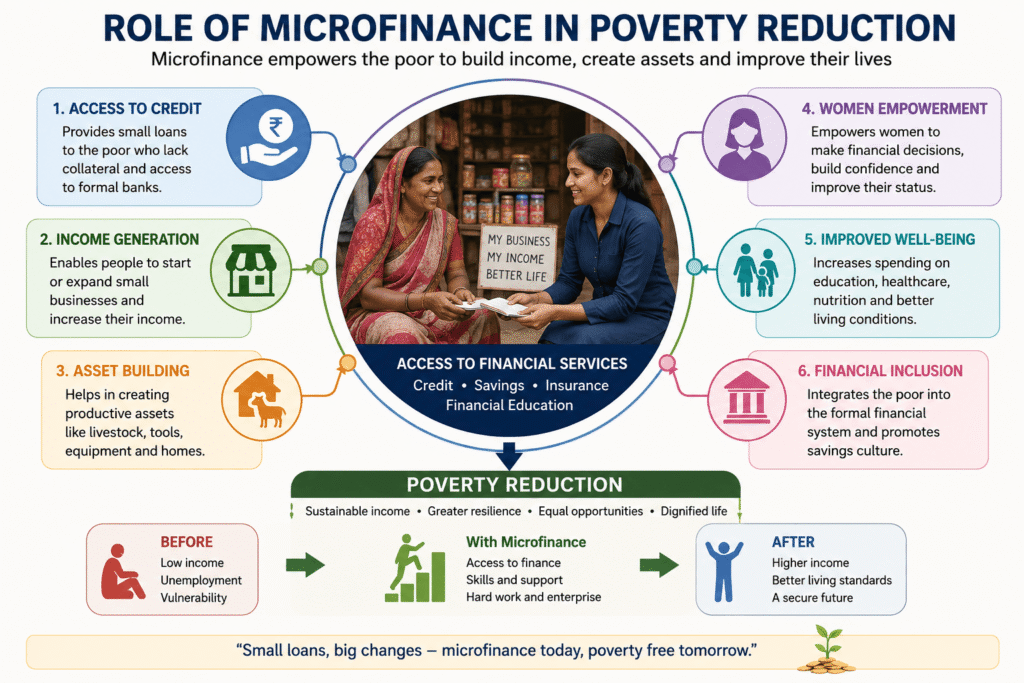
Poverty remains one of the biggest challenges in developing nations. Millions of people struggle daily without access to basic financial services. Microfinance has emerged as a powerful tool to fight poverty by providing small loans, savings, and insurance to low‑income individuals who are excluded from traditional banking systems.
This article explores how microfinance empowers communities, supports entrepreneurship, and contributes to sustainable economic growth.
What Is Microfinance?
Microfinance refers to financial services offered to individuals or small businesses who lack access to conventional banking. It includes microloans, micro‑savings, and micro‑insurance.
Key Features
- Small loans for self‑employment and business growth.
- Low interest rates compared to informal lenders.
- Group lending to ensure repayment and social accountability.
- Financial literacy programs for borrowers.
- Empowerment of women through access to credit.
Importance of Microfinance in Poverty Reduction
Microfinance plays a crucial role in improving living standards and reducing poverty.
Benefits
- Access to capital for small entrepreneurs.
- Job creation in rural and urban areas.
- Women empowerment through self‑employment.
- Financial inclusion for marginalized communities.
- Improved education and health through increased household income.
How Microfinance Works
Microfinance institutions (MFIs) provide small loans to individuals or groups. Borrowers use these funds to start or expand small businesses such as tailoring, farming, or retail shops.
Common Models
| Model | Description | Example |
|---|---|---|
| Grameen Model | Group lending with peer support. | Bangladesh |
| Self‑Help Groups (SHGs) | Community‑based savings and credit groups. | India |
| Village Banking | Local banks managed by community members. | Africa |
| Credit Unions | Member‑owned financial cooperatives. | Global |
| NGO‑based MFIs | Non‑profit organizations offering microloans. | Various countries |
Microfinance and Women Empowerment
Women are the backbone of microfinance programs. They use loans to start small businesses, educate their children, and improve family welfare.
Impact on Women
- Increased decision‑making power.
- Better access to education and healthcare.
- Reduced dependency on moneylenders.
- Enhanced social status and confidence.
Microfinance and Rural Development
In rural areas, microfinance supports agriculture, handicrafts, and small‑scale industries. It helps farmers buy seeds, tools, and livestock, improving productivity and income.
Examples
- Agricultural microloans for crop cultivation.
- Livestock financing for dairy and poultry businesses.
- Rural entrepreneurship programs for artisans and traders.
Challenges in Microfinance
Despite its success, microfinance faces several challenges:
- High interest rates in some institutions.
- Loan defaults due to poor repayment capacity.
- Limited outreach in remote areas.
- Lack of financial literacy among borrowers.
- Regulatory issues affecting sustainability.
Global Examples of Successful Microfinance
| Country | Institution | Impact |
|---|---|---|
| Bangladesh | Grameen Bank | Lifted millions out of poverty. |
| India | SKS Microfinance, Bandhan Bank | Empowered rural women entrepreneurs. |
| Kenya | Equity Bank | Promoted financial inclusion through mobile banking. |
| Philippines | CARD Bank | Supported small business growth. |
| Peru | Mibanco | Strengthened micro‑enterprise development. |
The Role of Technology in Microfinance
Digital platforms and mobile banking have revolutionized microfinance.
Technological Advancements
- Mobile money for easy transactions.
- Digital credit scoring for faster loan approvals.
- Blockchain for transparency.
- Online training for financial education.
Microfinance and Sustainable Development Goals (SDGs)
Microfinance directly supports several UN Sustainable Development Goals:
- Goal 1: No Poverty
- Goal 5: Gender Equality
- Goal 8: Decent Work and Economic Growth
- Goal 10: Reduced Inequalities
The Future of Microfinance
The future of microfinance lies in digital transformation, social impact investing, and inclusive growth. Governments and private organizations are collaborating to expand microfinance networks globally.
Emerging trends include:
- Green microfinance promoting eco‑friendly businesses.
- AI‑based risk assessment improving loan management.
- Micro‑insurance protecting vulnerable populations.
- Youth entrepreneurship programs encouraging innovation.
Conclusion
Microfinance is more than just lending money — it’s about empowering people, building communities, and reducing poverty. By providing access to financial services, microfinance helps individuals turn ideas into income and dreams into reality.
With proper regulation, technology, and education, microfinance can continue to be a cornerstone of global poverty reduction.

