
Introducation
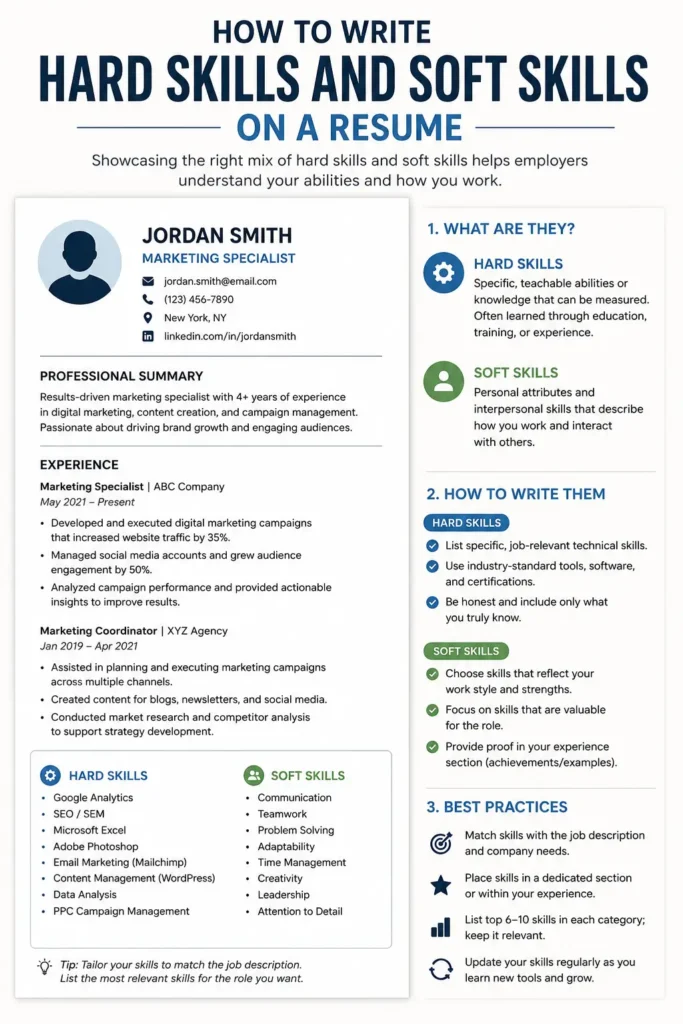
Your resume is more than just a list of qualifications — it’s a reflection of your abilities, personality, and potential. Employers today look for a balance between hard skills (technical abilities) and soft skills (interpersonal qualities). Knowing how to present both effectively can make your resume stand out and help you land your dream job.
In this guide, we’ll explore how to write hard and soft skills on your resume, why they matter, and how to tailor them for maximum impact.
1. Understanding Hard Skills and Soft Skills
Before writing your resume, it’s important to understand the difference between the two.
| Type | Definition | Examples |
|---|---|---|
| Hard Skills | Technical or job-specific abilities that can be measured or taught. | Programming, Data Analysis, Accounting, Graphic Design |
| Soft Skills | Personal traits that define how you interact and work with others. | Communication, Leadership, Teamwork, Problem-Solving |
SEO Keywords: hard skills vs soft skills, resume writing tips, skills for job seekers, how to list skills on resume
2. Why Both Skills Matter
Employers want candidates who are not only technically competent but also emotionally intelligent and adaptable.
Hard skills show you can do the job. Soft skills show you can fit into the team and company culture.
Example: A software developer with coding expertise (hard skill) and teamwork (soft skill) is more valuable than one with technical skills alone.
3. Where to Include Skills on Your Resume
You can showcase your skills in multiple sections:
- Skills Section: A dedicated area listing both hard and soft skills.
- Experience Section: Demonstrate skills through achievements.
- Summary Section: Highlight key skills relevant to the job.
Tip: Use bullet points for clarity and easy scanning.
4. How to Write Hard Skills on a Resume
Hard skills should be specific and relevant to the job you’re applying for.
Steps:
- Review the job description carefully.
- Identify technical skills mentioned.
- Match your skills with the employer’s requirements.
- Use industry-standard terminology.
Example:
- Python Programming
- Data Visualization (Tableau, Power BI)
- SEO Optimization
- Financial Analysis
SEO Keywords: technical skills for resume, hard skills examples, resume optimization tips
5. How to Write Soft Skills on a Resume
Soft skills are harder to measure but equally important. They show your personality and work ethic.
Tips:
- Choose skills that align with the company’s culture.
- Support them with examples in your experience section.
- Avoid generic terms like “good communicator” — be specific.
Example:
- Strong verbal and written communication skills
- Leadership experience managing a team of 10
- Excellent time management and adaptability
SEO Keywords: soft skills for resume, interpersonal skills examples, communication skills for job seekers
6. Top Hard Skills to Include on a Resume
Here are some high-demand hard skills across industries:
| Category | Examples |
|---|---|
| Technology | Coding (Python, Java), Cloud Computing, Cybersecurity |
| Marketing | SEO, Google Analytics, Content Strategy |
| Finance | Budgeting, Forecasting, Excel Modeling |
| Design | Adobe Photoshop, UX/UI Design, Video Editing |
| Education | Curriculum Development, Online Teaching Tools |
Tip: Always tailor your hard skills to the specific job posting.
7. Top Soft Skills to Include on a Resume
Employers value these soft skills across all professions:
| Skill | Why It Matters |
|---|---|
| Communication | Builds trust and clarity in teamwork. |
| Leadership | Inspires and guides others effectively. |
| Problem-Solving | Shows creativity and analytical thinking. |
| Adaptability | Demonstrates flexibility in changing environments. |
| Teamwork | Promotes collaboration and productivity. |
SEO Keywords: top soft skills for resume, employability skills, career growth skills
8. How to Balance Hard and Soft Skills
A perfect resume combines both skill types seamlessly.
Example Format: Skills Section:
- Hard Skills: Data Analysis, Project Management, SQL
- Soft Skills: Leadership, Communication, Time Management
Tip: Use a mix of measurable and descriptive skills to show versatility.
9. Showcase Skills Through Achievements
Instead of just listing skills, demonstrate how you’ve used them.
Example:
- “Led a team of 5 to complete a marketing campaign that increased engagement by 40%.”
- “Developed a data dashboard using Power BI to improve reporting efficiency.”
SEO Keywords: resume achievements examples, how to highlight skills on resume, career success tips
10. Tailoring Skills for Different Jobs
Different roles require different skill sets.
Example:
- For Marketing Jobs: SEO, Creativity, Communication
- For IT Jobs: Programming, Problem-Solving, Analytical Thinking
- For Teaching Jobs: Empathy, Organization, Curriculum Design
Tip: Customize your resume for each application.
11. Using Keywords for ATS (Applicant Tracking Systems)
Many companies use ATS software to scan resumes.
Tips:
- Use keywords from the job description.
- Avoid overstuffing — keep it natural.
- Include both hard and soft skills strategically.
SEO Keywords: ATS resume optimization, resume keywords for job search, how to pass ATS screening
12. Mistakes to Avoid
- Listing irrelevant skills.
- Using vague terms like “hard-working.”
- Copying skills directly from job postings without context.
- Forgetting to update your resume regularly.
Solution: Keep your resume concise, relevant, and updated. 13. How to Improve Your Skills
13. How to Improve Your Skills
Employers appreciate candidates who continuously learn.
Ways to Improve:
- Take online courses (Coursera, Udemy, LinkedIn Learning).
- Attend workshops or webinars.
- Practice communication and leadership in real-life situations.
SEO Keywords: skill development for students, career improvement tips, professional growth strategies
14. Resume Example: Skills Section
Skills
- Hard Skills: Python, Data Analysis, Project Management, SEO
- Soft Skills: Leadership, Communication, Time Management, Adaptability
Tip: Keep it clean, organized, and easy to read.
Conclusion
Writing hard and soft skills on a resume is about balance. Hard skills show your technical expertise, while soft skills highlight your personality and teamwork abilities.
By tailoring your skills to the job, using keywords strategically, and demonstrating achievements, you can create a resume that stands out in today’s competitive job market.
Remember: Employers hire for skills, but they keep you for your attitude.